

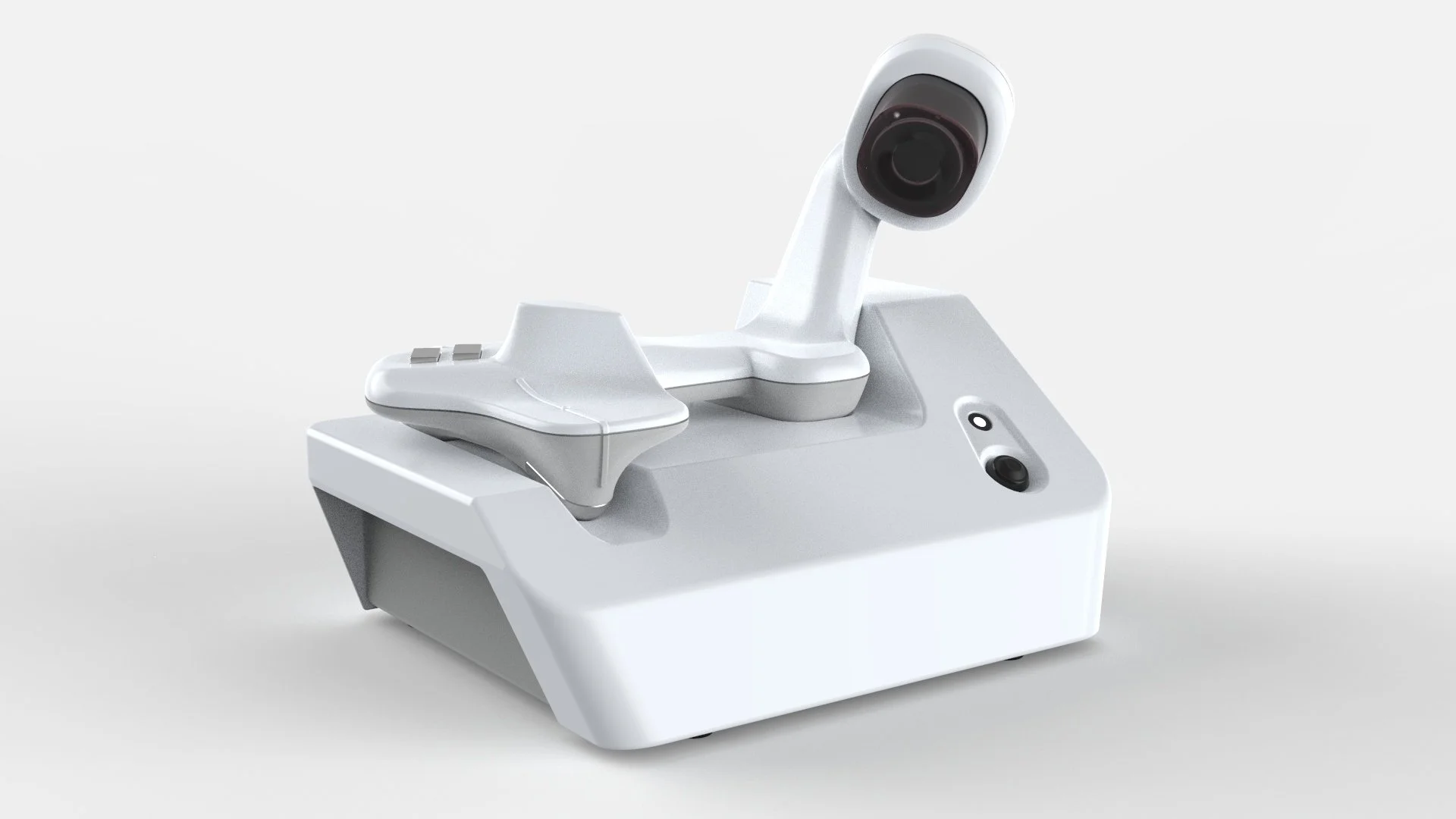
The Technology Behind Every Confident Decision

JVPClinic Explained

Non-invasive. Real-Time. Actionable.

Our patented ECG-gated, optical imaging platform measures subtle changes in neck arteries and veins to generate a clinically accepted indicator of cardiac filling pressures without requiring invasive procedures or subjective interpretation.

It works by measuring JVP height , a clinical indicator of heart failure, particularly reflecting right-sided heart dysfunction and fluid overload.
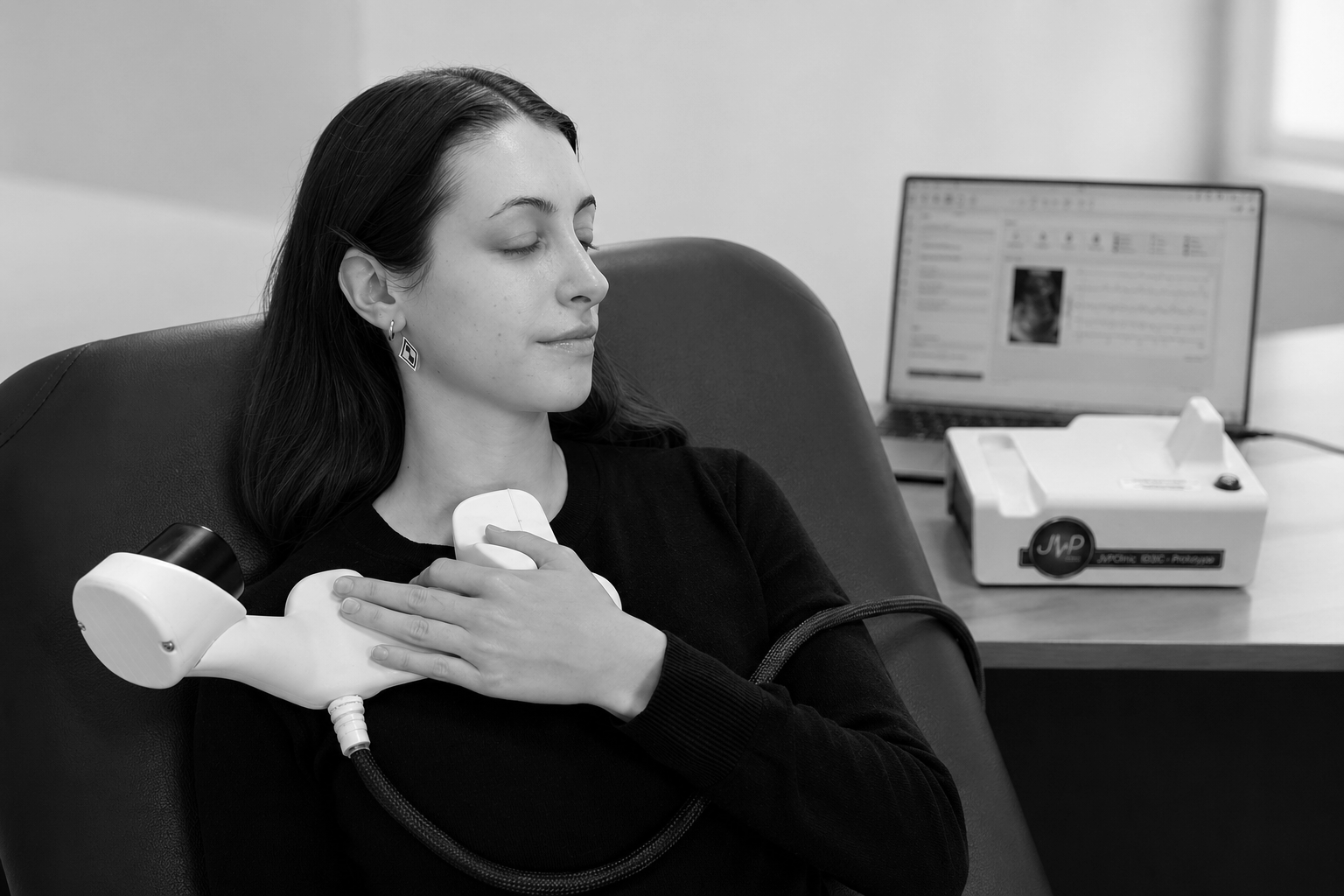
How JVPClinic Works in 3 Easy Steps

1
Position
2
Measure
3
Act
01
Step 1 — Position
Place the device. Start the assessment.
The clinician places JVPClinic on the patient's chest, where the sternal and palm ECG electrodes establish contact. Designed to accommodate a wide range of patient body types and positions, the system enables consistent measurement setup with minimal training.
02
Step 2 — Measure
Capture synchronized physiologic signals.
JVPClinic simultaneously acquires neck video and ECG signals, enabling synchronized analysis of arterial and venous pulsations. Automated signal processing helps ensure consistent timing and supports objective measurement of jugular venous dynamics.
03
Step 3 — Act
Objective result in under 60 seconds
JVP height is calculated and presented as a clear, objective measurement that can support clinical assessment and care planning. The technology has been evaluated against ultrasound-based reference measurements, with ongoing and planned clinical studies, including cardiac catheterization laboratory investigations comparing JVPClinic measurements with invasive hemodynamic reference measurements.

The Technology Inside JVPClinic

ECG-Gated Video Capture

Synchronized neck video acquisition insuring precise timing and accuracy in venous pulsation detection.

Accelerometer Integration

Multi-axis accelerometry provides real-time postural data and respiratory data.

AI-Ready Data Architecture

Synchronized multi-sensor data streams - video, ECG, and accelerometer - are captured simultaneously and stored in a structured format designed for future AI applications.

What Used to Take an Expert Now Takes Less Than 60 Seconds

JVPClinic automates a complex bedside skill into a simple, standardized measurement — so every clinician has access to the data that only specialists could obtain before.

From setup to result
Average acquisition time — 60 seconds
0
seconds
0s
Device positioned
Device placed on patient's chest. Contact with sternal and palm ECG electrodes.
~10s
ECG-gated imaging begins
ECG and neck video capture, ensuring precise timing and anatomical accuracy.
~30s
Computer vision analysis
Algorithms quantify venous waveforms. Accelerometry provides spatial position and motion detection.
~60s
Objective result delivered
JVP height measurement ready.
The device
Engineered for the
Point of Care
Transforming subjective bedside assessment into an objective vital sign — as simple and accessible as a blood pressure cuff.
1
Single-Lead ECG
The electrodes work together to complete the ECG circuit — capturing a single-lead ECG signal without adhesive patches or skin preparation.
2
Optical Imaging
A high-resolution camera images the jugular region — capturing subtle venous pulsations invisible to the naked eye.
3
Multi-Axis Accelerometer
Built-in accelerometry automatically corrects JVP height for the patient's body position — delivering accurate, reproducible results whether sitting or semi-recumbent.
JVPClinic front view JVPClinic side view JVPClinic rear view
ECG Electrodes
Camera
Accelerometer
Front view
Side view
Rear view
Front view

JVPClinic vs. Existing Methods

See how JVPClinic stacks up against the current standard of care.

JVPClinic Recommended Ultrasound Implantable Devices Traditional Vitals
Predictive of fluid overload✓✓✓✗
Cost-effective✓✓✗✓
Non-invasive✓✓✗✓
Clinically validated✓✓✓✗
Workflow alignment✓✗✗✓
No specialist required✓✗✓✓

JVPClinic outperforms every existing method across all five dimensions — combining clinical accuracy, workflow practicality, and accessibility that no current tool can match.

Whether you manage heart failure patients at the bedside or lead a health system, we’d love to start a conversation about what JVPLabs can do for your care team.

Ready to Help Shape the Future of Heart Failure Care?