

Heart Failure affects an estimated 64M cases globally
A Crisis Too Large to Ignore
Heart failure is one of medicine’s most costly and preventable crises, yet the tools clinicians rely on to manage it are decades out of date.
The gap between what’s needed and what’s available costs lives and billions of dollars every year.

The Problem
Heart failure is one of medicine’s most expensive and preventable crises.
It drives more hospitalizations and 30-day readmissions than any other condition and remains the single largest cost driver for Medicare.
Yet despite this burden, clinicians still lack a practical, reliable way to monitor cardiac filling pressures at the bedside.
Existing methods are invasive, expensive, or too complex for routine use.
That gap costs patients - and health systems - every single day.
JVPLabs exists to close that gap making the most accurate cardiac indicator accessible to every clinician, in every care setting.
Why Current Methods Fall Short
Ultrasound
Ultrasound can provide accurate JVP assessment at the bedside, but it requires specialized equipment and trained operators. Because examinations are time-consuming and resource-intensive, it is not practical for frequent, repeated monitoring in most clinical, home, or community settings.
Traditional Vitals
Daily weight, blood pressure, and symptom tracking remain the most common monitoring tools, yet they often change only after hemodynamics have already worsened. As a result, clinicians may be responding to deterioration rather than identifying risk earlier.
Implantable Devices
Implantable hemodynamic monitoring devices provide continuous physiologic data but require invasive procedures and carry significant cost. Their use is typically limited to select high-risk patients, leaving most heart failure patients without access to objective hemodynamic monitoring.
None of these methods provide what clinicians need most:
an objective, non-invasive repeatable measure of cardiac filling pressure that works in any care setting.
The Solution
JVPLabs is advancing how clinicians assess congestion in heart failure patients.
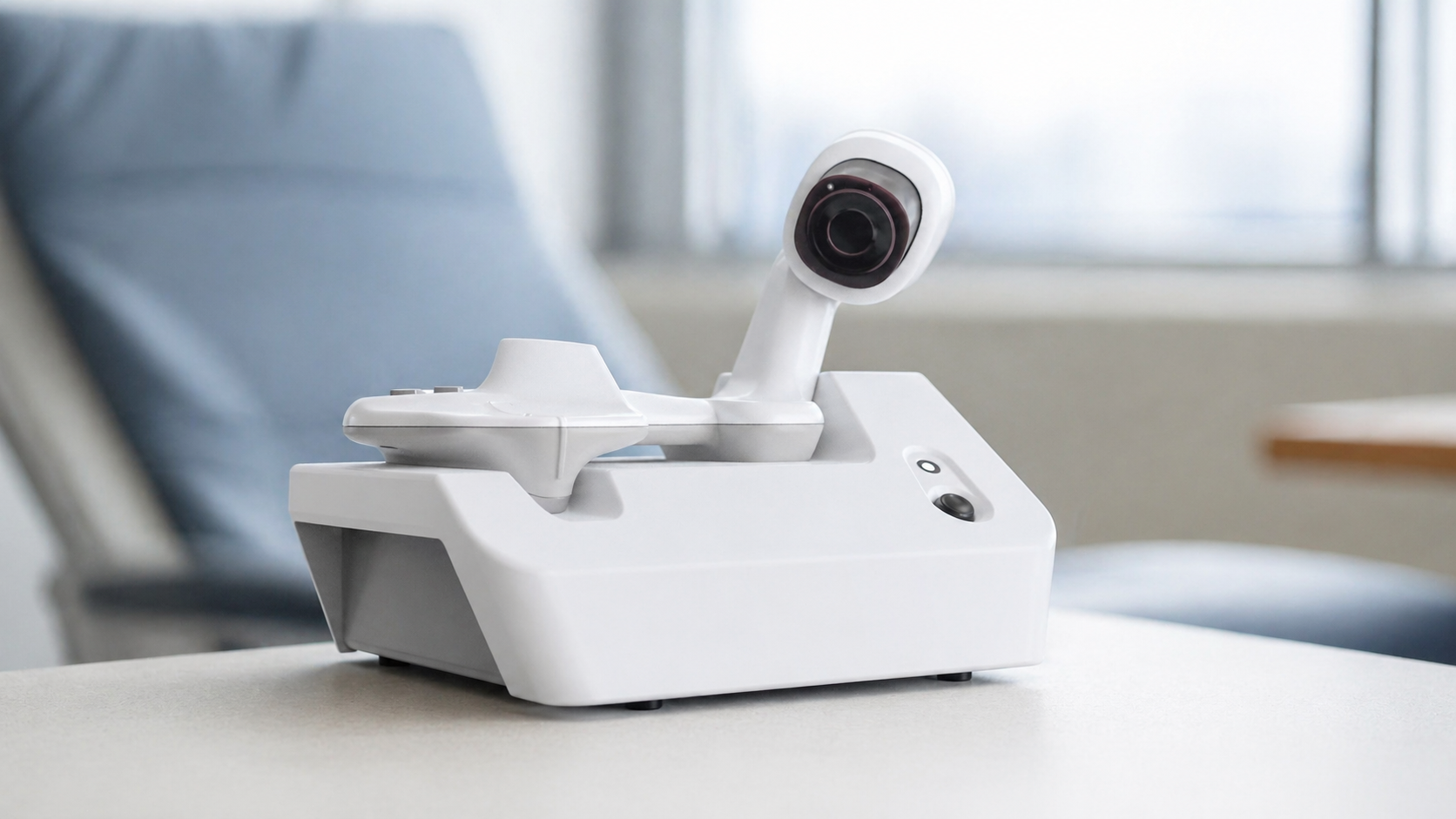
Our non-invasive technology automates Jugular Venous Pressure (JVP) assessment, providing an objective measurement associated with cardiac filling pressures and fluid status.
In about 60 seconds, trained healthcare professionals can capture a repeatable hemodynamic measurement without invasive procedures or specialized imaging equipment.
The result is a streamlined approach to obtaining objective physiologic information that can support clinical decision-making across hospital, clinic, home, and community care settings.
-
Our solution gives clarity and peace of mind. By providing a simple, non-invasive way to monitor fluid status, it helps them better understand their condition and track their progress, reducing uncertainty and anxiety.
-
Real time access to non-invasive cardiac filling pressures enables more informed decisions, earlier interventions, and better-aligned care. It turns a traditionally subjective assessment into a standardized tool clinicians can depend upon.
-
Heart failure is expensive primarily due to hospitalization and readmissions. By helping teams determine when patients are truly stable, our technology supports optimized discharge timing and ongoing outpatient management, with the potential to significantly reduce costs across the continuum of care.
Clinical Benefits Across the Care Continuum
Objective, repeatable measurement every time. Validated against gold-standard ultrasound, JVPClinic eliminates the variability of manual assessment-giving every clinician consistent, reliable data they can act on with confidence.
1
Precision & Reliability
Catch deterioration before it becomes a crisis. Serial JVP measurements track fluid status over time, detecting volume overload early, before symptoms appear. This shifts care from reactive treatment to proactive intervention.
2
Trend-Based Management
60 seconds. Minimal training. Immediate results. Designed for busy clinical environments, JVPClinic fits naturally into existing vital workflows. Even elderly patients achieve 87.5% independent success after a brief training session.
3
Workflow Efficiency
One device. Every care setting. From the emergency department to the dialysis center to the outpatient clinic, JVPClinic works wherever your patients are, creating true continuity of hemodynamic monitoring across the care continuum.